
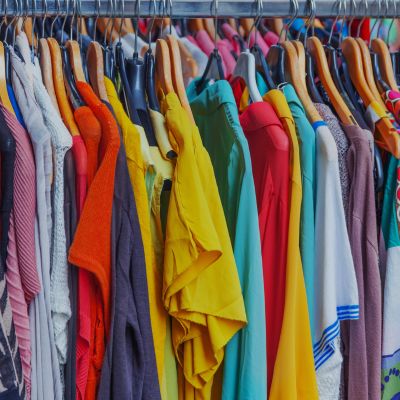
Did you know Canadians throw out nearly 500 million kilograms (or about a billion pounds) of clothing and fabric-containing home goods every year? Globally, textile waste has increased dramatically due to the rise in clothing consumption and production.
Our current production model is linear: we take resources, make clothing, and then dispose of them. Because the materials used to make clothing are often unsustainable, they have a massive environmental footprint. Many garments are designed to be short-lived, resulting in them being quickly discarded, resulting in a large portion of these materials being sent straight into landfills or incinerators instead of being kept in circulation.
What are Circular Textiles?
A circular economy for textiles is designed sustainably from the start: clothes, textiles, and fibres are kept at their “highest value” during use. Once these textiles can’t be used anymore in this form, they are reimagined into other useful items, always avoiding becoming waste.
How We Get There
- Circular Business Models: Designing and producing clothes of higher quality and providing access to them through circular business models—such as rental services, clothing swaps, and repair services—will shift our perception of clothing from being disposable to becoming long-lasting.
- Industry Responsibility: The textile, apparel, and footwear industries have historically been a leading force of industrialization around the world. With their experience and expertise in production, marketing and sales, brands are in the best position to pursue and position circular business models as attractive and fashionable options.
Why it matters
Thinking circularly about our clothing has more benefits than you might realize!
- It improves the well-being of our communities by factoring in living wages, creating local jobs, and increasing our resiliency against things like climate change.
- Doing “circular” business becomes more affordable. Materials become cheaper when there is higher demand, so recycled materials become cheaper for businesses to use in their products
Facts & Stats – Canada
- Canadians, on average, purchase 70 new articles of clothing a year.
- In 2021, a report estimated over 1.3 billion kg (1.3 million metric tonnes) of used and waste apparel were disposed of in Canada. Of this, about 240,000 tonnes were diverted for reuse, though some of this was downcycled into rags—not keeping these materials at their “highest value.”
Facts & Stats – Global
- South of the border, the United States was estimated to produce approximately 17.3 billion kg (17 million imperial tons) of textile waste in 2018.
- Each year, people consume more than 80 billion pieces of new clothing, making the clothing industry one of the world’s biggest polluters.
- It takes 2,700 litres of water to make one new t-shirt.
- On average, we only wear 50% of our clothes—the rest sits unused in our closets.
- Plastics and textiles go hand-in-hand: every time we wash synthetic materials like polyester and nylon, tiny plastic fibres break off, and up to 40% of these microfibres can end up in our waterways.
According to the Ellen MacArthur Foundation:
- From 2000-2015, clothing production approximately doubled, driven by a growing middle-class population across the globe and increased per capita sales.
- Less than 1% of material used to produce clothing is recycled into new clothing, equal to more than USD $100 billion worth of materials lost to disposal each year.
- The textiles industry relies mostly on non-renewable resources—98 million tonnes in total per year—including oil to produce synthetic fibres, fertilisers to grow cotton, and chemicals to produce, dye, and finish fibres and textiles.
- It is estimated that more than half of fast fashion produced is disposed of in under a year.
- After clothing is used, almost all the value in the materials they are made from is lost.
- Of the total fibre input used for clothing, 87% is landfilled or incinerated, representing a lost opportunity of more than USD $100 billion annually.
- As much as 73% of material going into the clothing system is lost after final garment use, 10% is lost during garment production, and 2% is sent to landfill or incineration from garments that are produced yet never make it to market.
- In total, people around the world dispose of clothing at a rate equivalent to an entire garbage truck load per second.
What You Can Do
- The easiest thing we can do is increase the average number of times our clothes are worn.
- Buy clothing made with reused and sustainable materials—it sends a clear message to companies that sustainable textile production matters, and these practices become more commonplace as demand grows.
- Only wash what really needs to be washed, air-dry your laundry when possible, and spot-wash to extend time between washes. This decreases wear and tear on your clothing and reduces the amount of microfibres entering our waterways.
- Be mindful of what and how much you’re buying, and what you do with your clothing afterward—small choices like these reduce our collective impact on the environment.